The Valley of a Thousand Kasbahs
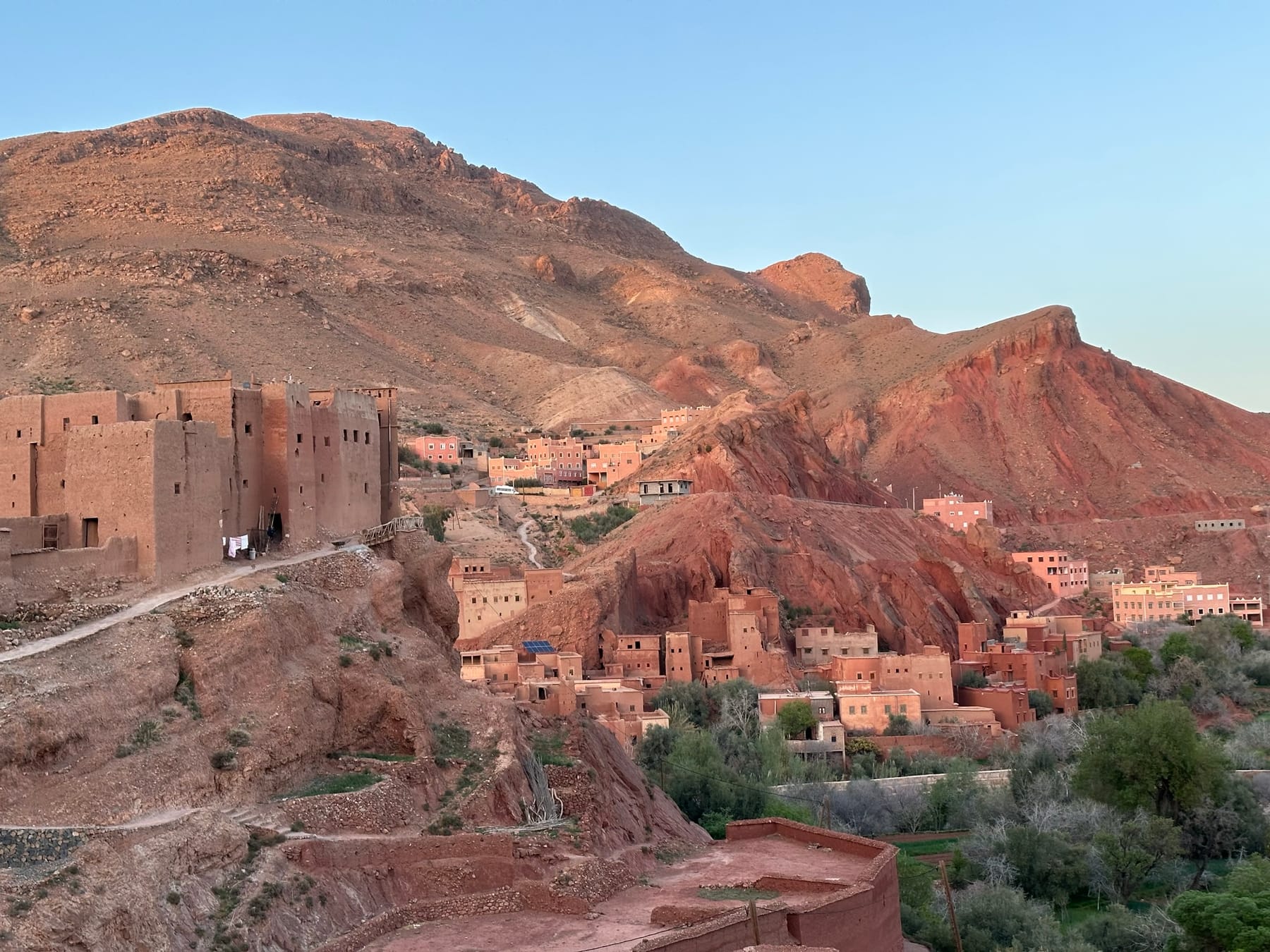
The Dades Valley cuts through a landscape of red rock and eroded cliffs between the town of Boumalne Dades and the High Atlas, following the Dades River. It's nicknamed the Valley of a Thousand Kasbahs for the fortified earthen villages and family kasbahs — some centuries old, many still inhabited — built along its length, their crenellated walls blending almost seamlessly into the surrounding rock in color and texture. The valley's most photographed stretch is a series of tight hairpin switchbacks that climb through wind- and water-carved rock formations known locally for shapes resembling monkey fingers and other natural sculptures.
Todra Gorge: Morocco's Grand Canyon
A short drive east of the Dades Valley, the Todra Gorge cuts a narrow slot through the same mountain range — in its most dramatic section, sheer rock walls rise roughly 160 meters (about 525 feet) on either side of a canyon floor barely wide enough for the road and the Todra River running alongside it. The gorge is a popular spot for rock climbers, with hundreds of established routes on its limestone walls, and for a shorter walk along the river beneath the cliffs even for visitors not climbing.
How the Two Fit Together
The Dades Valley and Todra Gorge sit close enough together that most itineraries visit both on the same day, typically as a stop on the road between Merzouga (in the Sahara) and Marrakech or Fes. A common route runs Merzouga to Tinghir (the gateway town to Todra Gorge), a stop to walk into the canyon, then west along the Dades Valley road and its switchbacks before continuing toward Ouarzazate and over the High Atlas.
Driving the Road Yourself vs. a Private Driver
The switchback sections of the Dades Valley road are narrow, winding, and — in places — have sharp drop-offs without much in the way of barriers, which is part of why many visitors prefer a private driver-guide who knows the route rather than self-driving, particularly for anyone not used to mountain roads. A driver also means both passengers can take in the scenery and photograph the switchbacks and rock formations without needing to keep their eyes on the road.
Where to Stop
Along the Dades Valley, a viewpoint overlooking the switchbacks is a natural stop for photos, as are several of the kasbahs that welcome visitors, some now converted into guesthouses. At Todra Gorge, the narrowest section of canyon — reachable by a short walk or drive from Tinghir — is the highlight, with cafés built directly against the canyon walls offering a place to rest in the shade.