Why Is Chefchaouen Blue?
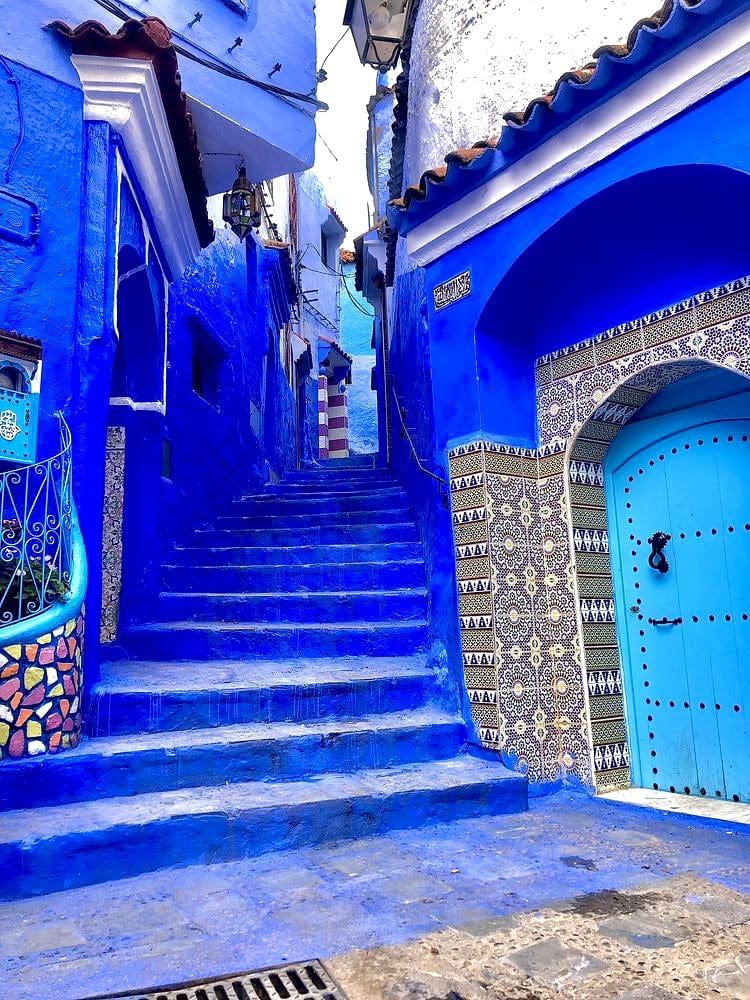
The most common explanation traces the blue to the town's Jewish refugee community in the 1930s, for whom blue held religious significance — echoing the sky and heaven, and traditionally used to keep mosquitoes away. Whatever its exact origins, the tradition has been maintained and even intensified in recent decades as the town's blue medina became internationally known, with locals repainting walls, stairways, and doorways in shades from pale sky blue to deep indigo.
The Best Photo Spots
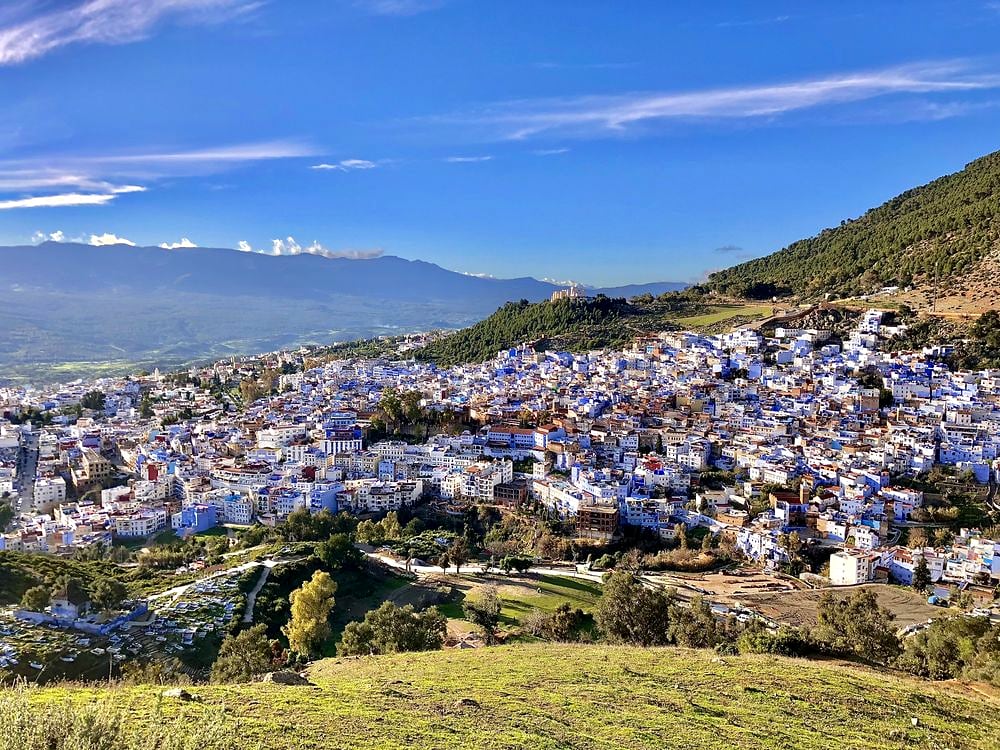
The medina itself rewards slow, aimless wandering more than any single "best" spot, but a few places stand out. The Spanish Mosque, a short uphill walk from the medina, offers a panoramic view over the blue rooftops, especially beautiful at sunset. Closer to the center, Outa el Hammam square is the town's social heart, ringed by cafés, while the Ras El Maa waterfall at the edge of the medina is a cool, green contrast to the blue stone lanes.
Shopping in Chefchaouen
Chefchaouen's souks are smaller and noticeably more relaxed than Marrakech or Fes, known particularly for handwoven wool blankets, local goat cheese, and Rif Mountain honey. Bargaining is still expected but tends to be gentler here than in the country's larger medinas.
Day Trip or Overnight?
Chefchaouen works well either as a day trip from Fes or Tangier, or as an overnight stop on a longer route through northern Morocco. A day trip gives you time to wander the main lanes and catch the golden-hour light on the blue walls; an overnight stay lets you experience the town again in the quiet early morning, before day-trip crowds arrive from the coast.